
In the ever-evolving virtual world, it is difficult to predict what will happen a month from now, let alone a year. However, this does not mean individuals and businesses should stop caring, neither does it mean they should take online security and privacy lightly. Taking into account how cyberattacks have increased considerably, and continue to do so, it is of the utmost importance to know, or at least try to predict what’s to come.
The number of ransomware attacks continues to increase than ever before and major institutions have fallen victim to these attacks. There are numerous reports as to how cyberattacks have caused blackouts, loss of data for medical institutions and even affecting the US elections.
It only comes to show how cybercriminals are bent upon to do whatever it takes to cause a virtual Armageddon. Several predictions have already been made in regards to online security and privacy for 2017, out of which here are a few:
IoT (Internet of Things) will be Regulated with a Heavy Hand
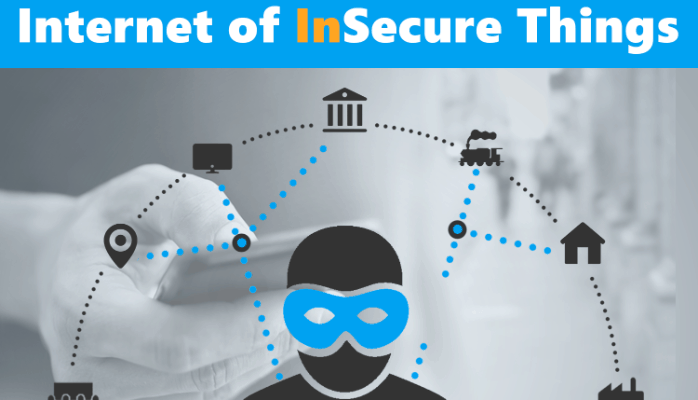
Manufacturers of drones to toys will be regulating their devices with a heavy hand, seeing how threats are increasing on a daily basis. It is highly likely that regulations will be created in order for manufacturers to take responsibility for updates for their software.
Even though manufacturers do not offer many patches for IoT related products, the recent attacks will change that completely. It goes without saying that such security changes will be made to counter DDoS (Distributed Denial of Service) attacks, which have already become quite common. What this means is that minimum standards will most likely be introduced to protect consumers.
Integration of Best BYOD (Bring Your Own Device) Practices
The usage of smart devices like Smartphones and tablets has risen in the last four years, and it’s highly unlikely that 2017 will be any different. Companies have been encouraging employees to use their own devices at work. But then again, there are many risks associated with it.
According to recent studies, at least one in five employees using their own devices at work is vulnerable to data breaches. Experts believe if this trend is allowed to continue, it will put everyone at risk, and not just organizations alone. As for what is in store for 2017, it will be a constant struggle between protection, productivity and privacy.
It is difficult to assess what lies ahead, and how hackers will up their game, but one thing is for certain: businesses will need to find a way to ensure productivity via BYOD. Fortunately, this can be made possible by educating and training one’s employees about secure BYOD practices.
Introduction of Anti-Ransomware Policies
The Cloud has made things a lot easier than it could have ever been before. However, it is not entirely safe and serves as an easy target for hackers. Since organizations mostly make use of hybrid network infrastructures, it gives hackers all the access they will ever need to infiltrate systems and networks via backdoors. Once in, hackers can disable a whole system, which can result in loss of data and much more.
As long as public and private institutions utilize the cloud, hackers will always be ready to pounce and get what they want, all the while spreading infections. But that is not all; new ransomware and malware is being created by the minute and it is only logical to predict that aggressive anti-ransomware policies will be introduced.
All in all, the predictions stated above are not meant to frighten, but instead serve as a constant reminder as to how important online security and privacy really is. Additionally, it also allows security experts to come up with new strategies to deal with unpredictable situations, which as seen recently, have had devastating consequences.


