
Lights, camera, action! These words have long echoed through the corridors of Hollywood, representing the essence of captivating storytelling and masterful filmmaking. In the ever-evolving landscape of the entertainment industry, a new force has emerged, reinforcing the art of filmmaking as we know it: artificial intelligence (AI). With its ability to enhance creativity, streamline processes, and push boundaries, AI is revolutionizing Hollywood’s mastery of filmmaking.
Enhanced visual effects
One of the most prominent areas where AI is leaving its mark is in the realm of visual effects. Traditionally, creating stunning visual effects required meticulous manual labor and extensive time investments. However, with the integration of AI, Hollywood is witnessing an unprecedented leap in visual storytelling. AI algorithms can analyze vast amounts of data, generating photorealistic computer-generated imagery (CGI) that seamlessly blends with live-action footage.
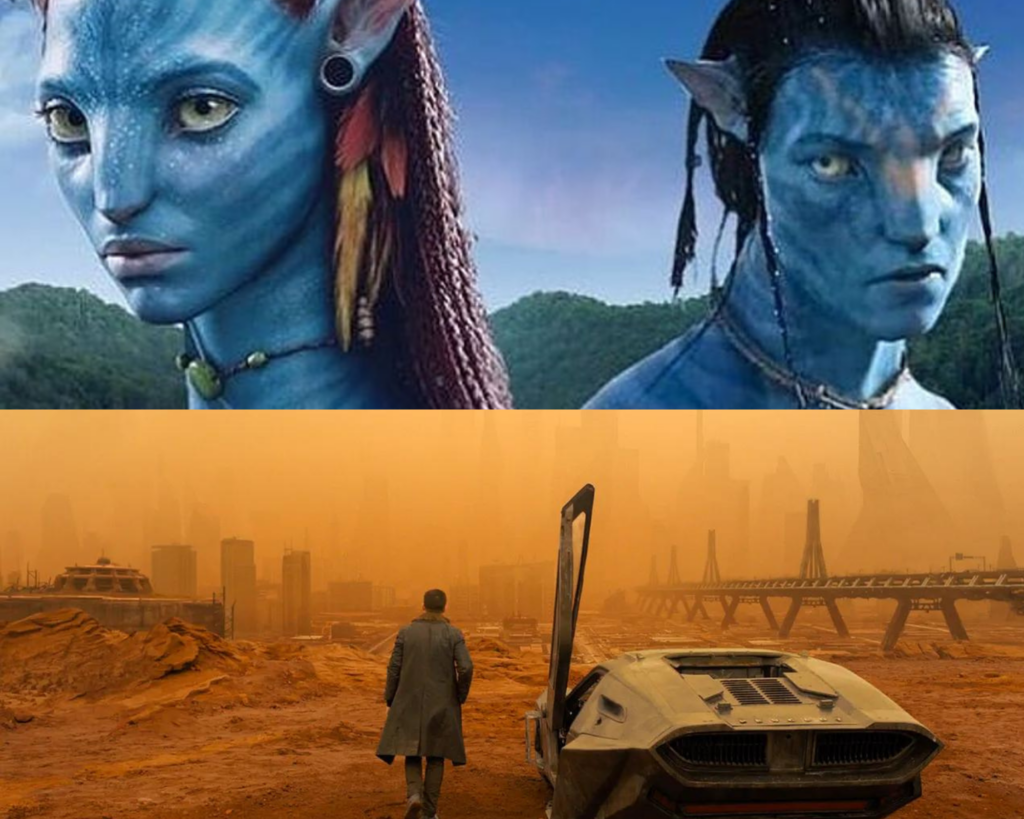
Films like “Avatar” and “Blade Runner 2049” have pushed the boundaries of visual effects with the aid of AI, immersing audiences in breathtakingly realistic and visually stunning worlds. AI’s ability to learn from existing data and envision unique creations has opened up new avenues for filmmakers to explore and expand their creative visions.
On a side note, Avatar: The Way of Water is now available on Disney+. However, if you cannot access this streaming service in your region, please check out our detailed guide on how to access Disney+ from anywhere.
Streamlined production process
AI is also streamlining various production processes, saving time and resources while maintaining quality standards. From script analysis and pre-production planning to post-production editing and marketing, AI tools are being employed to automate and optimize tasks. For instance, AI algorithms can analyze extensive datasets of successful films, identifying patterns that resonate with audiences and offering valuable insights for scriptwriters. In the editing room, AI-assisted software can accelerate the process, enabling faster cuts, color grading, and special effects adjustments.
Darren Hendler, who heads Digital Domain’s Digital Human’s Group along with his team used artificial intelligence and other sophisticated software to turn Josh Brolin into Thanos for Avengers: Infinity War. They used an AI algorithm trained on high-resolution scans of Brolin’s face to track his expressions down to individual wrinkles, then used another algorithm to map the resulting face renders onto Thanos’ body automatically before animators went in to make some finishing touches.

Before filming began, Brolin’s own facial expressions — with Industrial Light & captured the actor expressing everything from a wide smile to Magic’s high-resolution facial-scanning system, Medusa.
Furthermore, AI-driven predictive analytics can assist in marketing decisions, helping studios identify target audiences and optimize promotional campaigns. By automating routine tasks, AI frees up creative professionals to focus on the artistic aspects of filmmaking, empowering them to further refine their craft.
AI-driven storytelling
Storytelling lies at the heart of filmmaking, and AI is making its mark in this realm as well. AI algorithms can analyze vast databases of films, TV shows, and scripts, learning narrative structures and character arcs that resonate with audiences. This knowledge can then be utilized to generate script ideas, assist in dialogue writing, and even provide recommendations for story development. However, it’s important to note that AI is not replacing human creativity but acting as a powerful tool for storytellers.
It can be heard in synthesized voices and seen in visual effects such as deep fakes and de-aging. “I don’t know how they do it,” Harrison Ford recently told Stephen Colbert, describing how tech invented by George Lucas’s Industrial Light & Magic repurposed past footage to create his younger persona in the upcoming “Indiana Jones and the Dial of Destiny.”

According to McKinsey, some researchers have already used machine learning to identify emotional arcs in stories. One method developed at the University of Vermont involved having computers scan text—video scripts or book content—to construct arcs. These models consider all aspects of a video—not just the plot, characters, and dialogue but also more subtle touches, like a close-up of a person’s face or a snippet of music that plays during a car-chase scene. When the content of each slice is considered in total, the story’s emotional arc emerges.
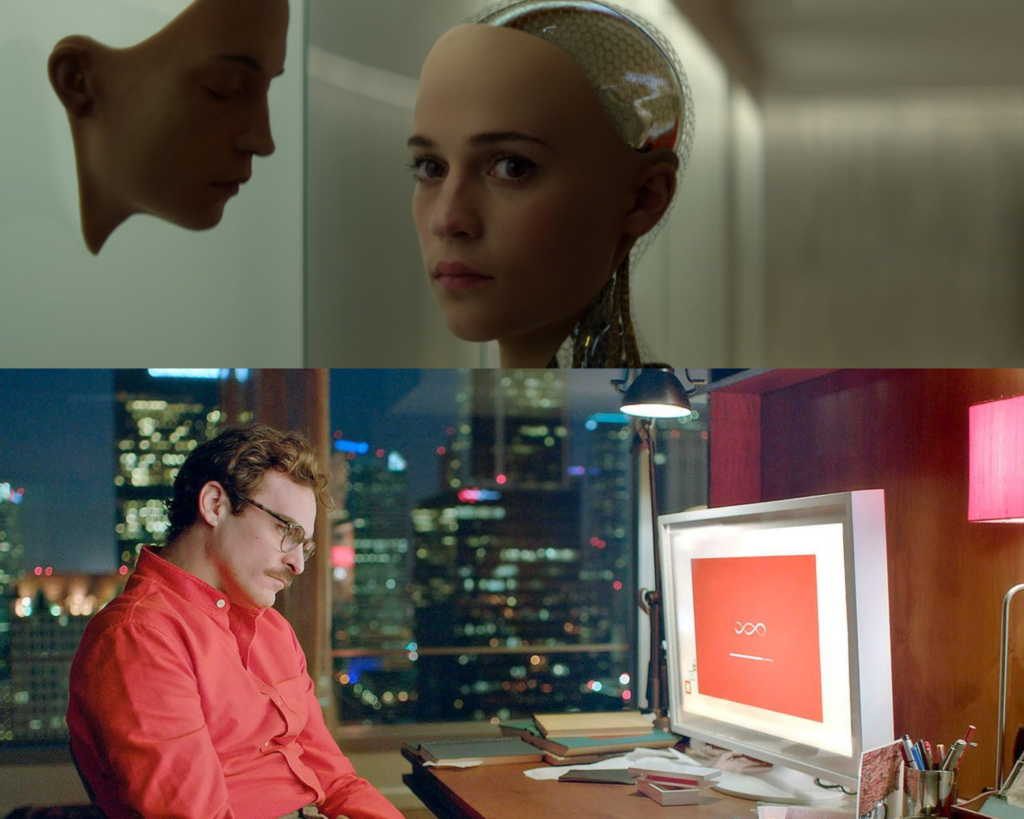
Films like Ex Machina and Her explore themes of AI-driven narratives and the intricate relationship between humans and machines, posing thought-provoking questions about the future of storytelling in the age of AI.
It is worth noting that you can stream Ex Machina on Max. If the service is not available in your country, you can use this guide to learn how to access Max on VPN.
AI-powered audience engagement
The audience experience is an essential aspect of filmmaking, and AI is helping studios better understand and engage with their viewers. AI algorithms can analyze vast amounts of audience data, including demographics, viewing habits, and social media interactions. This wealth of information enables studios to tailor marketing campaigns, optimize distribution strategies, and create personalized content recommendations.
Los Angeles-based startup Cinelytic is one of the many companies promising that AI will be a wise producer. It licenses historical data about movie performances over the years, then cross-references it with information about films’ themes and key talent, using machine learning to tease out hidden patterns in the data. Its software lets customers play fantasy football with their movie, inputting a cast, then swapping one actor for another to see how this affects a film’s projected box office.
The co-founder and CEO of Cinelytic, Tobias Queisser in an interview with The Verge said, “Say you have a summer blockbuster in the works with Emma Watson in the lead role. You could use Cinelytic’s software to see how changing her for Jennifer Lawrence might change the film’s box office performance.”
He further added, “You can compare them separately, compare them in the package. Model out both scenarios with Emma Watson and Jennifer Lawrence, and see, for this particular film … which has better implications for different territories.”
By harnessing the power of AI, Hollywood is transforming the way it connects with audiences, delivering more relevant and immersive cinematic experiences.


