
Millions of people around the world use a VPN daily. And given the popularity of the technology, the chances are that you may have used it too. In case you haven’t, then you may be asking questions like what is a VPN and how does a VPN work. Well, allow us to explain!
What is a VPN?
VPN is a tool that lets you enjoy complete privacy, security, and freedom online. With it, you can connect to servers from anywhere around the world. Your IP address and location changes because your communications now pass through a server installed in another country. This allows you to gain access to any of your favorite websites and content.
Moreover, a VPN also comes with features like military-grade encryption and internet kill switch. These keep your communications secure and private from prying eyes. A variety of protocols are used in VPNs for your online protection, such as:
- PPTP: One of the oldest protocols around, PPTP is fast and a great choice for activities like streaming and P2P file sharing. The weak encryption on offer, however, doesn’t make it the best option for security conscious people.
- L2TP: L2TP doesn’t provide any encryption whatsoever on its own, so it’s often paired with IPSec. Even though you might not be able to bypass some firewalls, it makes a good alternative to OpenVPN.
- IKEv2: Based and built on the IPSec protocol, IKEv2 is fast, secure, and a good option for those who want to establish a mobile VPN connection. However, it isn’t compatible with older platforms.
- SSTP: An improved version of the outdated PPTP, SSTP is owned by Microsoft and one of the most secure protocols around. Unfortunately, it’s only available on a limited number of devices, including Android, Windows, and Linux.
- OpenVPN: With robust encryption and relatively fast speeds, OpenVPN is the best all-round protocol. It’s open source and can be configured to use any port, which means it can help users get around most firewalls in no time.
How You Connect to the Web Without a VPN
When you connect to the web without a VPN, your communications remain exposed to the world. Your traffic passes through your ISP, and it can easily see what you’re doing on the web. In some countries, ISPs are required to store your metadata for a specific period of time so that government surveillance agencies can go through them whenever they want to.
Without a VPN, you’ll also find many websites restricted at your location. Your IP address gives away your real location and identity, after all!
How You Connect to the Web With a VPN
When you connect to the web with a VPN, your communications go through a secure and encrypted tunnel which ensures the privacy of your data. As a result, your ISP would be unable to monitor your online activities. Even the most powerful surveillance agencies will find it impossible to keep an eye on your data.
Your IP address and location will change as well. Any website that you visit will be shown a different location instead of your original one, enabling you to enjoy complete online freedom.
How Does a VPN Work?
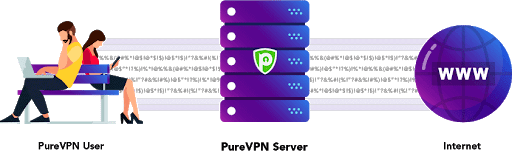
Now that you know what a VPN is, let’s get back to the question at hand, “how do VPNs work?” Well, here’s how these tools protect you online:
- You real identity and location is hidden through the use of a VPN-assigned IP address.
- All traffic and communications are secured using up to AES 256-bit encryption.
- The data to and from your computer or mobile devices passes via private tunnel.
In simple words, VPNs use IP masking, tunneling, and data encryption to offer a plethora of benefits like improved privacy, throttle-free speeds, and more!
How Do VPN Clients Work?
VPN client is a software that connects your device to the VPN servers of your choice. Depending on the VPN client app, you can scroll through the list of servers available for you to use and also select the features that you wish to use during your browsing session.
How Do VPNs Work on Mobile?
VPNs on mobile work in the same way as they do on your computer. You download the VPN app, and it works as a client to connect you with the VPN server of your choice. Your IP address changes, just like they do on computers. Moreover, your data is also encrypted and there are a set of features that you can play around with to enhance your online experience.
How Do VPN Tunnels and Encryption Work?
When you connect to a VPN server, your traffic and communications travel through a highly secure tunnel. Depending on the tunneling protocol that you have selected, you can either enjoy complete security, the fastest VPN speeds, or a combination of both. All the data passing through the VPN tunnel is also encrypted to prevent other unauthorized entities from accessing it.
How Do VPN Servers Work?
Connecting to a VPN server changes the route of your traffic. A VPN service has physical servers spread across the world, and connecting to one will change your original IP address and location. This means that if you have selected a VPN server in the US, you will get an American IP address which will enable you to access any American website or content of your choice.
How a VPN Works at Home?
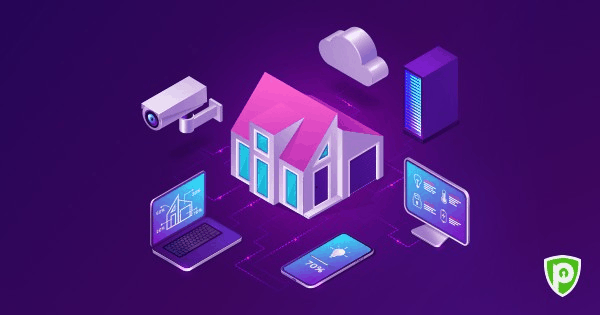
A VPN works the same way, regardless of what you’re using it for or where. Basically, it hides your IP address and safeguards your traffic using top-of-the-line encryption. As a result, you’re able to browse the Internet privately, securely, and freely!
As far as using a VPN at home is concerned, there are a few ways to go about this. The easiest is to install a VPN app on all your devices. However, you can also configure a VPN on your router and enjoy network-wide protection.
Common Reasons to Use a VPN
VPNs are fairly straightforward tools, but they can be used to do a broad array of things. These include but are not limited to:
Accessing Public Wi-Fi Safely
Did you know that most public Wi-Fi is unencrypted? Hackers can easily compromise the nonexistent security of these networks and steal your personal data for their own gain. With a VPN, you can protect all your traffic with encryption and use any public Wi-Fi safely.
Streaming Geo-Blocked Content
Popular video streaming services like US Netflix and BBC iPlayer impose geo-restrictions to keep unwanted viewers from watching their content. Using a VPN, you can get an IP address from an eligible region and stream otherwise unavailable content from anywhere.
Dodging Internet Censorship
You won’t be able to access the Internet openly in some countries. Take, for instance, China and Russia are well-known for their censorship of the web. A VPN lets you connect to a remote server in a censorship-free country so that you can browse with freedom.
Bypassing ISP Throttling
If you’re an avid streamer or downloader, chances are your bandwidth is being throttled by your ISP to maintain service quality. You can enjoy faster speeds by connecting to a VPN – it hides what you’re doing online from your ISP, leaving them unable to limit your Internet speed.
Looking for a Good VPN?
There are hundreds of VPN services available out there. Some are cheap, some are good for streaming, and some are ideal for security. However, only one VPN service offers a combination of this all. PureVPN has been in the VPN industry since 2006, and it is widely considered as the most secure and fastest VPN service. So if you’re searching for a good VPN service, look no further than PureVPN.
Still need some time to decide? No problem. We all need time before coming to a final decision, especially if it concerns our privacy and security. That’s why PureVPN offers a 31-day money-back guarantee, giving you an ample amount of time to see whether or not the service suits your needs!


PureVPN

June 20, 2023

3 years ago


